




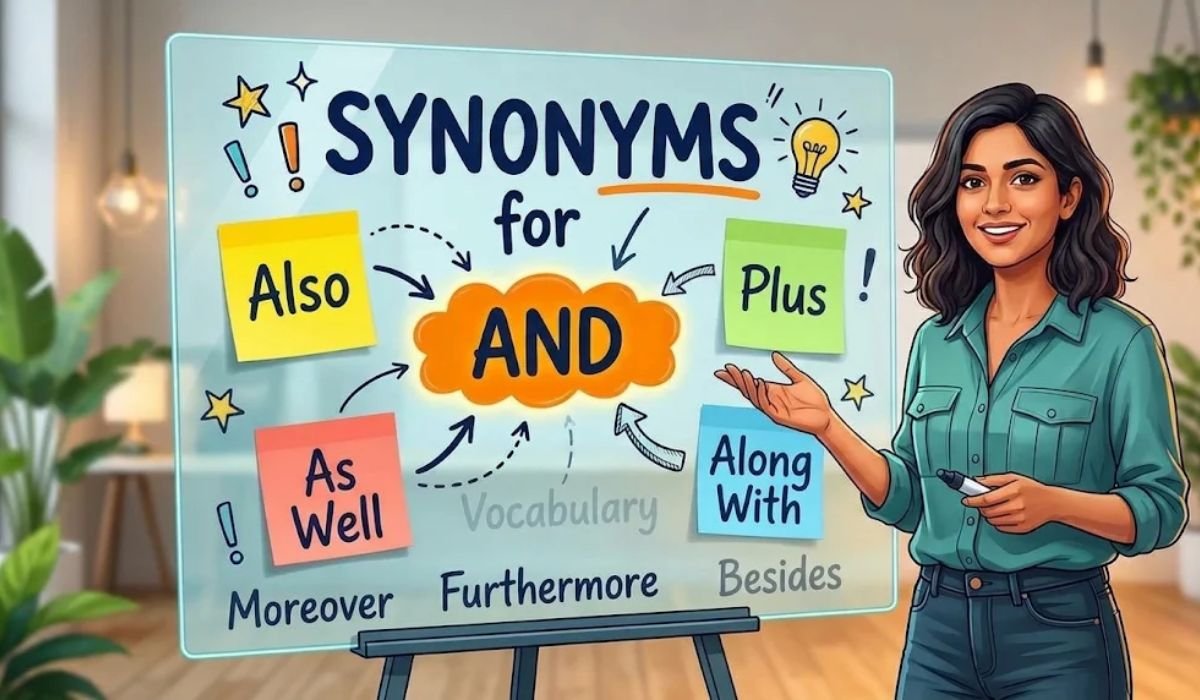
“And” is the most common connecting word in English, and it’s easy to overuse. Repeating it makes writing feel flat and choppy. The right alternative can make a sentence clearer, stronger, or more formal. But not every synonym fits every sentence. “Moreover” works in an essay and sounds odd in a text message. This guide ... <a title="Synonyms for “And”: 40+ Other Ways to Say “And” (With Examples)" class="read-more" href="https://metromegazine.com/synonyms-for-and/" aria-label="More on Synonyms for “And”: 40+ Other Ways to Say “And” (With Examples)">Read more</a>
“And” is the most common connecting word in English, and it’s easy to overuse. Repeating it makes writing feel flat and choppy. The right alternative can make a sentence clearer, stronger, or more formal.
But not every synonym fits every sentence. “Moreover” works in an essay and sounds odd in a text message. This guide groups alternatives by what “and” is doing in the sentence, so you can choose the right one quickly.
Quick Answer: Common Synonyms for “And”
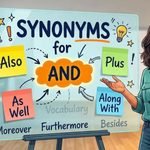
The most useful alternatives are also, plus, as well as, along with, in addition to, moreover, furthermore, besides, together with, and what’s more. The sections below show when to use each.
1. To Add Information
Use these when “and” simply adds another item or idea.
| Synonym | Example | Tone |
|---|---|---|
| Plus | The hotel is cheap, plus it’s close to the beach. | Casual |
| Also | She speaks French and also Arabic. | Neutral |
| As well as | He wrote the report as well as the summary. | Neutral |
| Along with | Bring a passport along with your ticket. | Neutral |
| Together with | The manager, together with her team, approved the plan. | Formal |
| In addition to | In addition to tuition, students pay a lab fee. | Formal |
| Including | The package includes a charger, including a spare cable. | Neutral |
| Too | I’d like coffee too. | Casual |
2. To Add Emphasis (Sentence Openers)
These start a new sentence and push the reader to treat the extra point as important. They are best for essays, reports, and persuasive writing.
- Moreover: The plan is affordable. Moreover, it is easy to implement.
- Furthermore: The study was small. Furthermore, it lacked a control group.
- Additionally: Additionally, the software supports mobile devices.
- Besides: Besides, we don’t have the budget for it.
- What’s more: What’s more, the results were repeatable.
- In addition: In addition, staff received training.
Punctuation tip: When these words open a sentence, follow them with a comma. When they sit mid-sentence, use a semicolon before them: The test was fast; moreover, it was accurate.
3. To Show Sequence (Meaning “Then”)
Sometimes “and” means “and then.”
- Then: She opened the door, then stepped outside.
- Afterward: We ate dinner and talked afterward.
- Next: Mix the flour, next add the eggs.
- Subsequently (formal): The company launched in 2020 and subsequently expanded to Asia.
4. To Join Similar Things in Lists
When connecting nouns or items, these often work better than repeating “and”:
- Along with, as well as, and plus work for natural lists.
- Ampersand (&) suits brand names, titles, and headings, such as Johnson & Sons. Avoid it in formal prose.
- Et cetera / and so on wrap up a list without naming every item.
5. To Show Contrast (When “And” Means “But”)
“And” sometimes hides a contrast. A sharper word makes the meaning clear.
- He studied for weeks and failed. → He studied for weeks, yet he failed.
- Alternatives: but, yet, however, still, although, even so
6. To Show Result or Condition
- So / therefore / thus: The road was closed, so we turned back.
- Provided that / on condition that: Used when “and” creates a conditional deal, as in contracts.
Formal vs. Informal: Which Should You Pick?
| Context | Best choices |
|---|---|
| Text messages, social media | plus, too, also |
| Emails and workplace writing | along with, as well as, in addition to |
| Academic essays and reports | moreover, furthermore, additionally, in addition to |
| Legal or technical writing | together with, as well as, provided that |
When You Should Keep “And”
Replacing every “and” is a mistake. Keep it when:
- The sentence is a simple list: “apples, oranges, and pears” reads best as is.
- Rhythm matters: Short, natural speech often needs “and.”
- Fixed phrases: “Black and white,” “salt and pepper,” and “ladies and gentlemen” shouldn’t change.
- Clarity is at stake: A fancy replacement can confuse readers.
Good writers don’t remove “and.” They use it on purpose.
A Common Grammar Trap: Subject-Verb Agreement
Replacing “and” can change the grammar. Compare:
- The teacher and the students are ready. (and = plural subject)
- The teacher, along with the students, is ready. (the subject stays singular)
Words like “along with,” “as well as,” and “together with” don’t create a plural subject, so the verb follows the first noun.
Frequently Asked Questions
What is another word for “and”?
Common alternatives include also, plus, as well as, along with, and in addition to. The best one depends on whether you’re adding, sequencing, or emphasizing.
What is a formal synonym for “and”?
Moreover, furthermore, additionally, in addition to, and together with suit formal and academic writing.
What is a casual synonym for “and”?
Plus, too, and also feel natural in conversation and informal writing.
Can I start a sentence with “and”?
Yes. It’s grammatically acceptable and common in modern writing, though use it sparingly in formal documents.
Is “as well as” the same as “and”?
Close, but not identical. It adds information, but it doesn’t make the subject plural, which affects verb agreement.
What is the symbol for “and”?
The ampersand (&).
Conclusion
Varying how you connect ideas makes writing clearer and more engaging. Use plus and also for casual tone, along with and as well as for everyday professional writing, and moreover and furthermore for formal pieces. Keep a plain “and” whenever it does the job best.